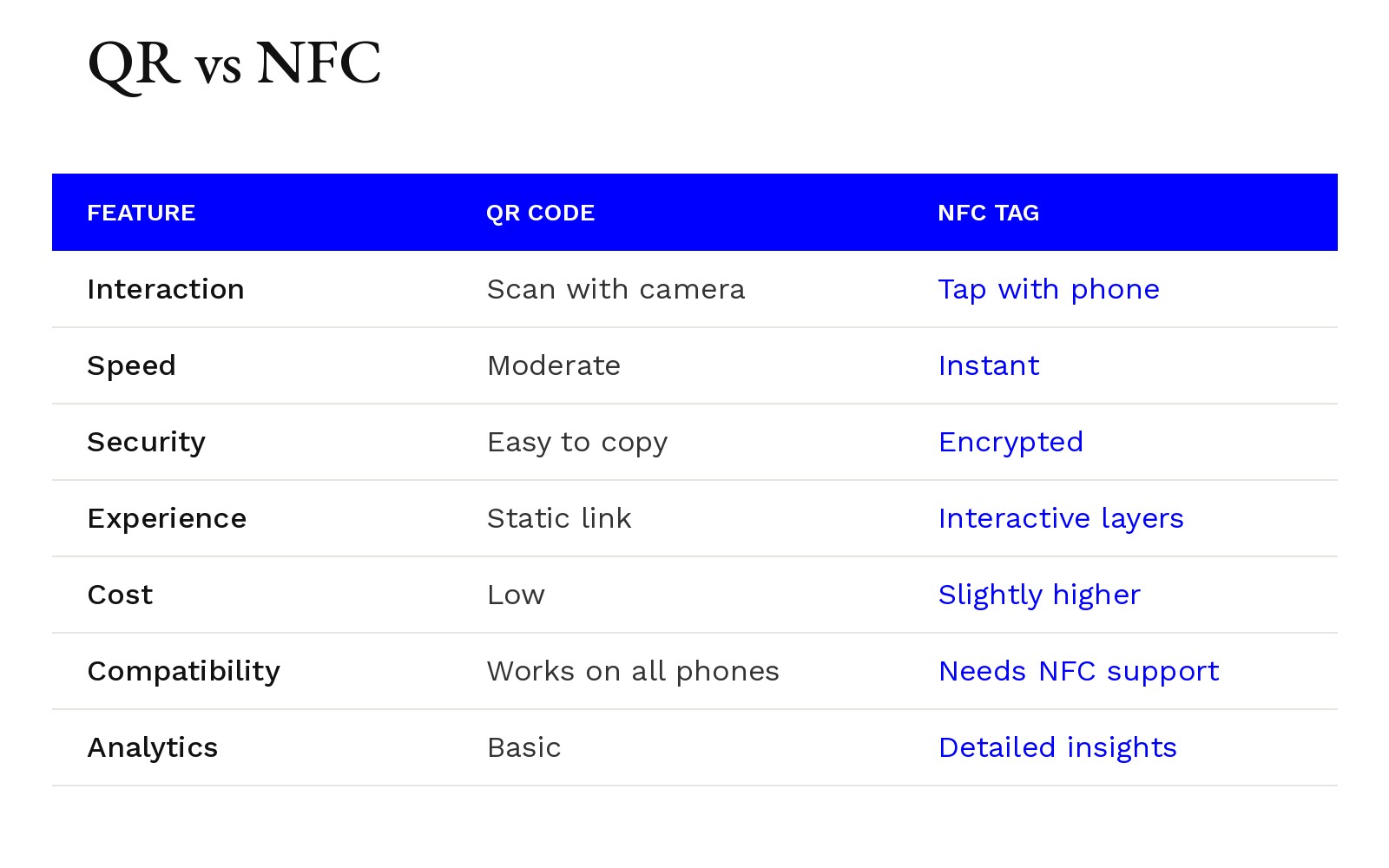
Why QR codes are fine, but NFC does it better
From scan and see to tap and explore
QR codes have served galleries well, but technology and visitor expectations have moved on.
Near Field Communication labels, or NFC, offer a faster, more secure and more personal way to connect people with art.
Here's a breakdown of the difference between the traditional QR code and NFC labels, and the difference it can make to how you engage with buyers. It's time to move from scan and see to tap and explore.
What QR codes do well, and where they stop
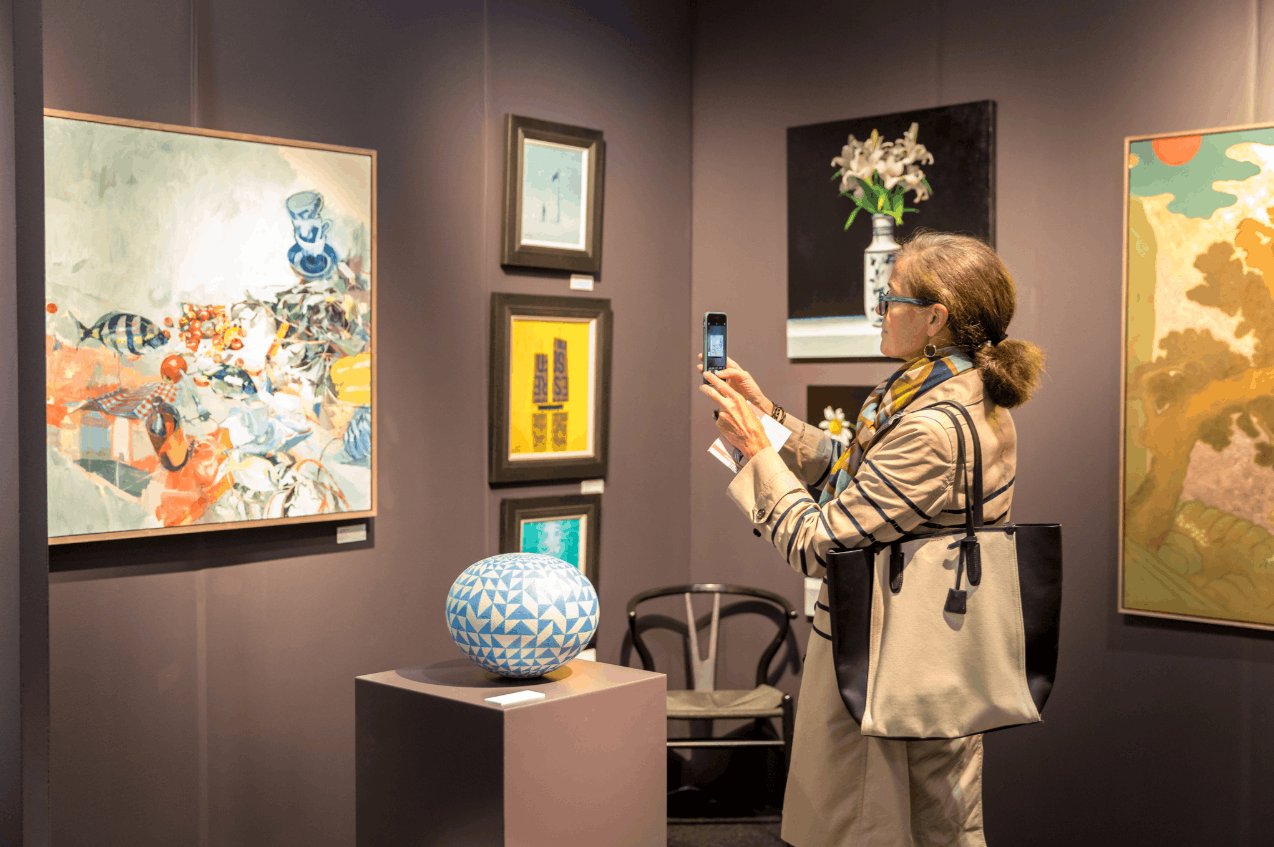
QR codes are common in galleries and museums. They're cheap, simple, and work on almost any phone. Many galleries use them to share artist bios, give access to videos or audio guides, and offer translations or accessibility features.
QR codes are helpful, but they have limits. They usually lead to one webpage or file and don't create much engagement. Visitors need to open their camera and scan, which can be awkward in busy spaces or poor light. QR codes can also be copied or replaced, which makes them less secure. Most of all, they can't adapt to the visitor or offer a personal experience.
QR codes do the job, but they're static and one-dimensional.

NFC: a better way to connect
NFC creates a smoother and more interactive experience. Visitors only need to tap their phone near a label (no scanning required). This simple action can open videos, artist stories, real-time updates, or collector-only content. It also lets galleries gather detailed insights about visitor engagement while keeping data private and secure.
Unlike QR codes, NFC can offer personalised experiences. It can adapt based on what the visitor views, giving them relevant recommendations or next steps. The technology is fast, discreet, and fits naturally into the gallery setting.
In essence, NFC can turn your label into a small digital doorway instead of a basic link.
A QR code points to a page. A Label Latte label starts a conversation. Join the waitlist if you're intrigued.